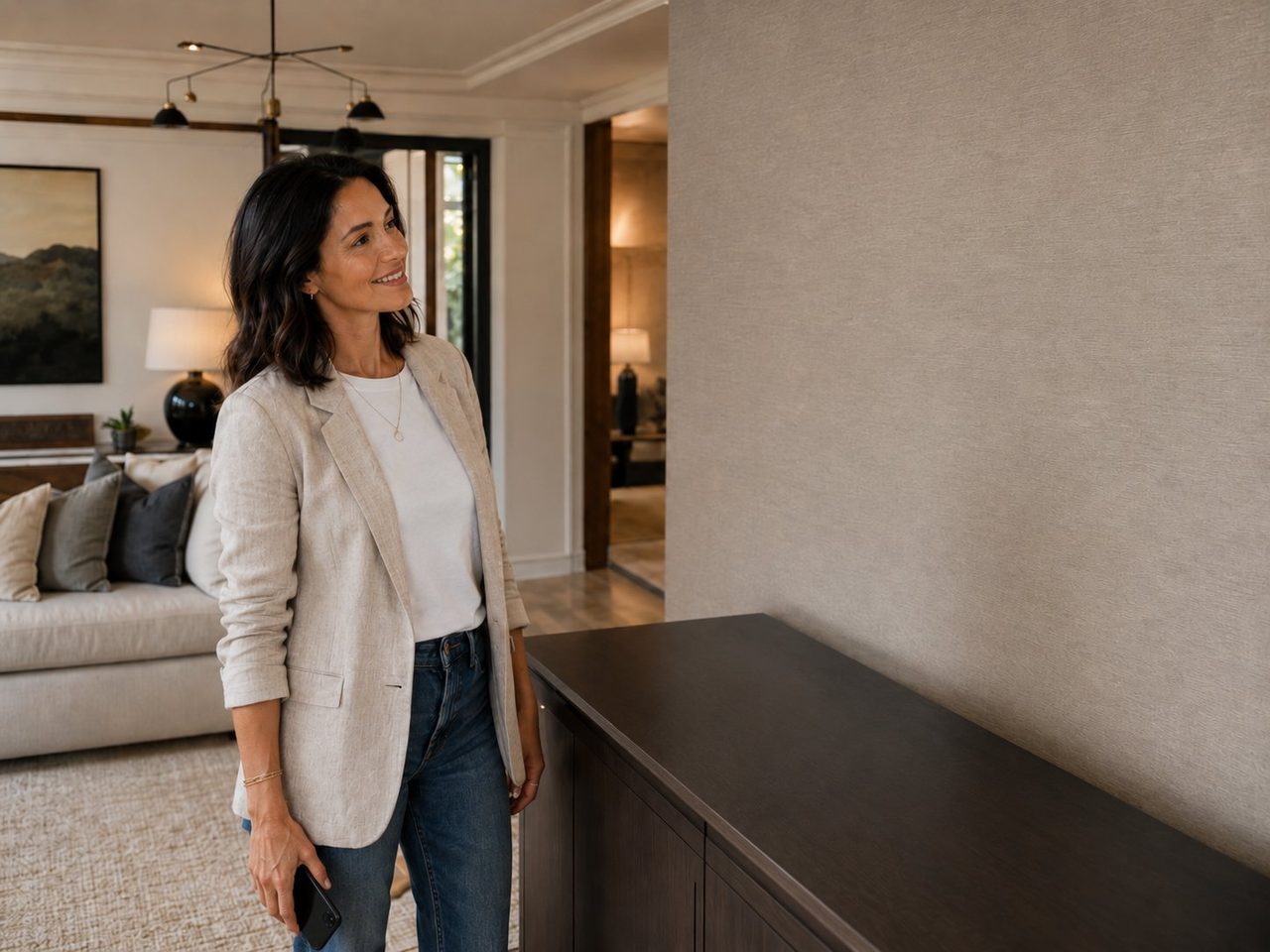
 focal
focal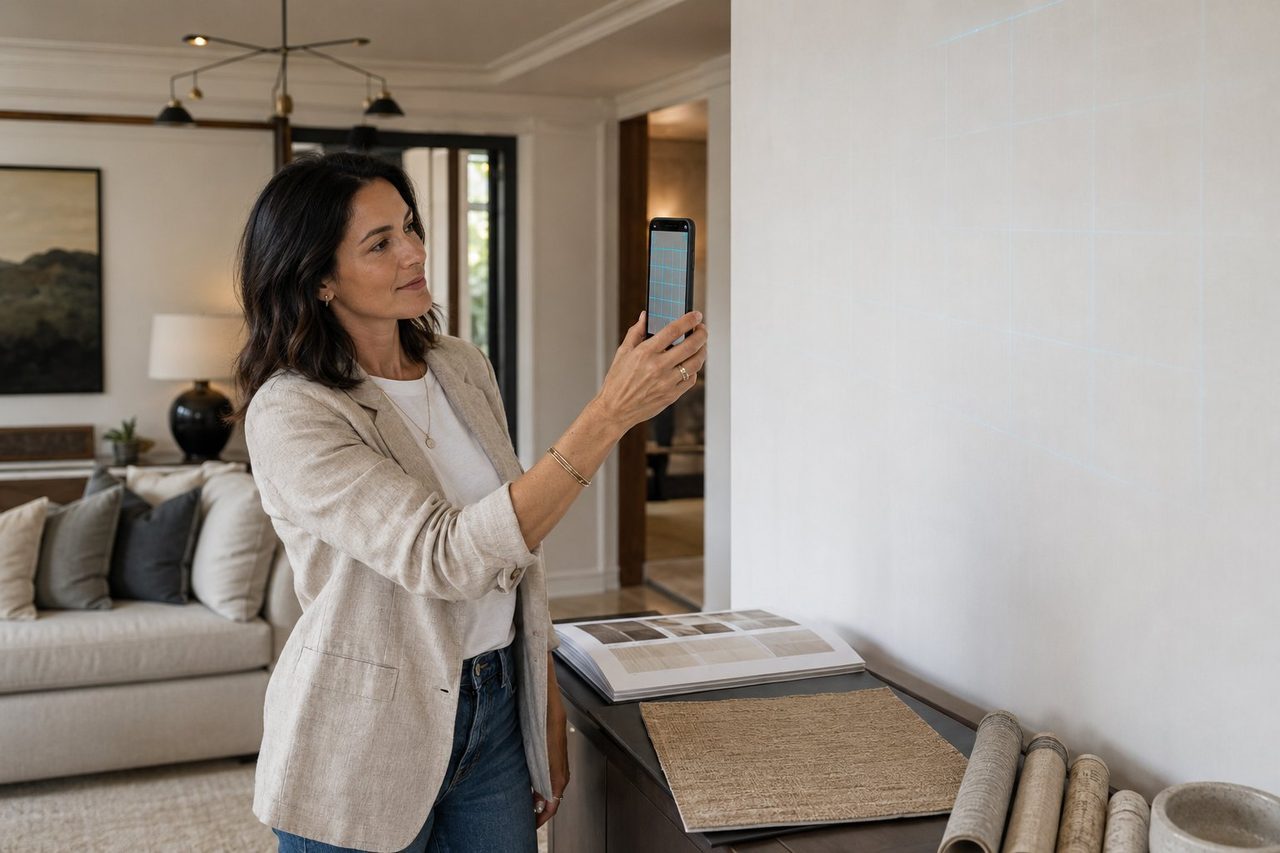
You found the wallpaper — say it's Phillip Jeffries Tribeca Threads in Thomas Tan, a 54-inch wide-width wallcovering. Now you just have to order the right amount, and that's where it falls apart. One source says five rolls, another says seven, and with a wide-width textile like Tribeca Threads you're not even sure it's counted in rolls at all. The problem isn't that wallpaper math is impossible. It's that most calculators don't know your actual room or your actual paper. focalScan starts with a scan of the room, then lets you factor in roll size, repeat, match type, doors, windows, and waste before you order — so the number fits your job, not a generic average.
The quick answer
You need enough to cover every wall — but the final number depends on roll size, pattern repeat, match type, and waste, not just square footage. And some wallcoverings aren't even sold by the roll — a two-toned textile like Tribeca Threads is sold by the yard, in one dye lot. The cleanest way to get it right is to scan the room and let those details drive the count instead of guessing.
Why calculators give different answers
Put the same room into three wallpaper calculators and you'll get three numbers. They aren't broken — they're just making different assumptions. One works in square footage. One counts single rolls; another counts doubles. Many ignore the pattern repeat completely. Same room, different math, different answer. A generic wallpaper roll calculator works from square footage and stock assumptions; focalScan starts with your actual room and your actual paper — down to whether it's sold by the roll or, like a wide-width textile, by the yard. That's the difference between a guess and an order you can trust.
The details that change the roll count
A handful of things move the number. A good estimate accounts for all of them:
- How it's sold. Wallpaper is often priced as a single roll but sold as a double — so "five" and "seven" can be the same amount. And some wallcoverings aren't sold by the roll at all — a wide-width textile like Tribeca Threads is sold by the yard in one dye lot.
- Pattern repeat. The bigger the repeat, the more is trimmed off each strip to line up the design — and the more you need. Wide-width textiles like Tribeca Threads are the exception: a two-toned woven surface with no repeat — a metallic sheen that adds warmth and texture without any trimming waste.
- Match type. A random match — like a wide-width textile — wastes almost nothing. A straight match lines up across. A drop match staggers every other strip and usually wastes the most.
- Doors and windows. For a quick estimate, don't automatically subtract them — the paper still has to match above, below, and around openings, so the order should cover the full wall.
- Waste and dye lot. focalScan builds the waste factor into the estimate automatically. The one thing you still control: order all the yardage at once, in a single dye lot — critical for premium textiles like Tribeca Threads.
Why guessing is risky
Both ways of being wrong cost you. Run short on a wide-width wallcovering like Tribeca Threads and the next yards may come from a different dye lot — the tone shifts lot to lot, so the seam shows, and you can't fix it once your lot sells out. Overbuy and you've paid for material that sits in a closet. The whole point of a good estimate is landing on the number that's actually right — which is why getting the inputs right matters so much.
Run short and the dye lot may not match. Overbuy and you've paid for rolls you'll never hang.
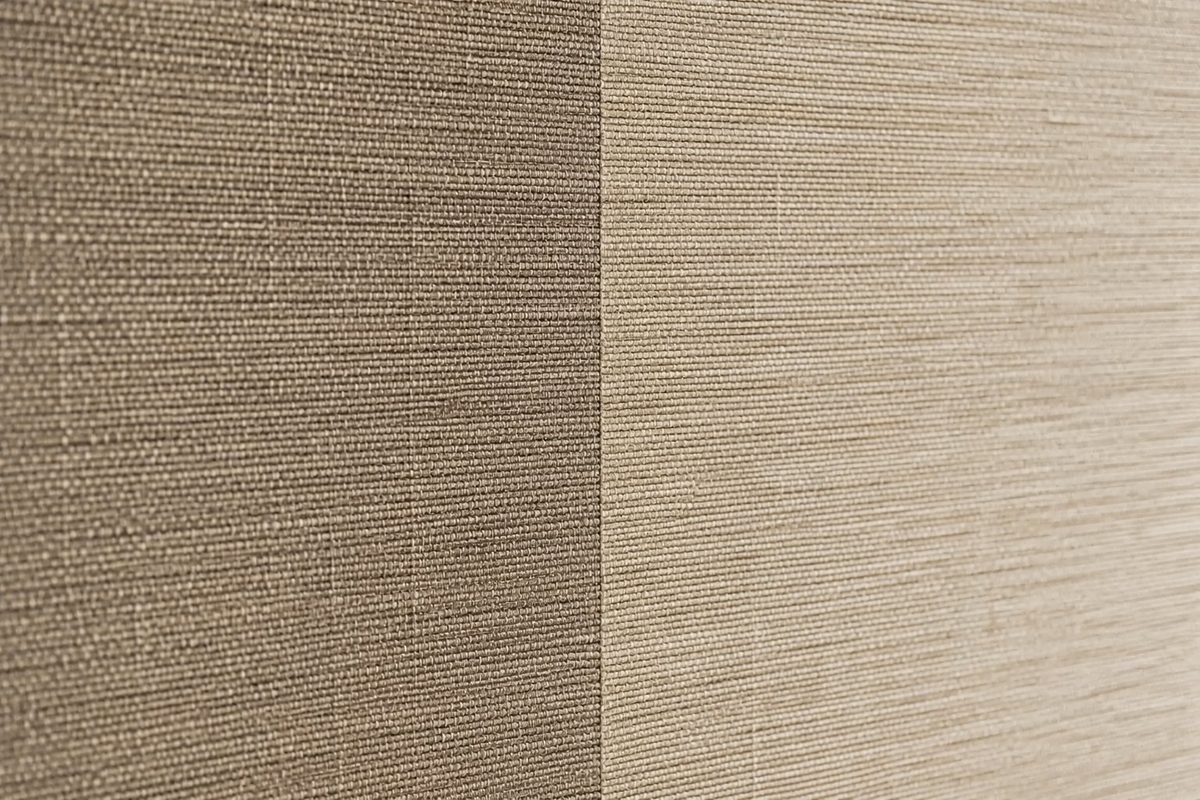
How focalScan solves it
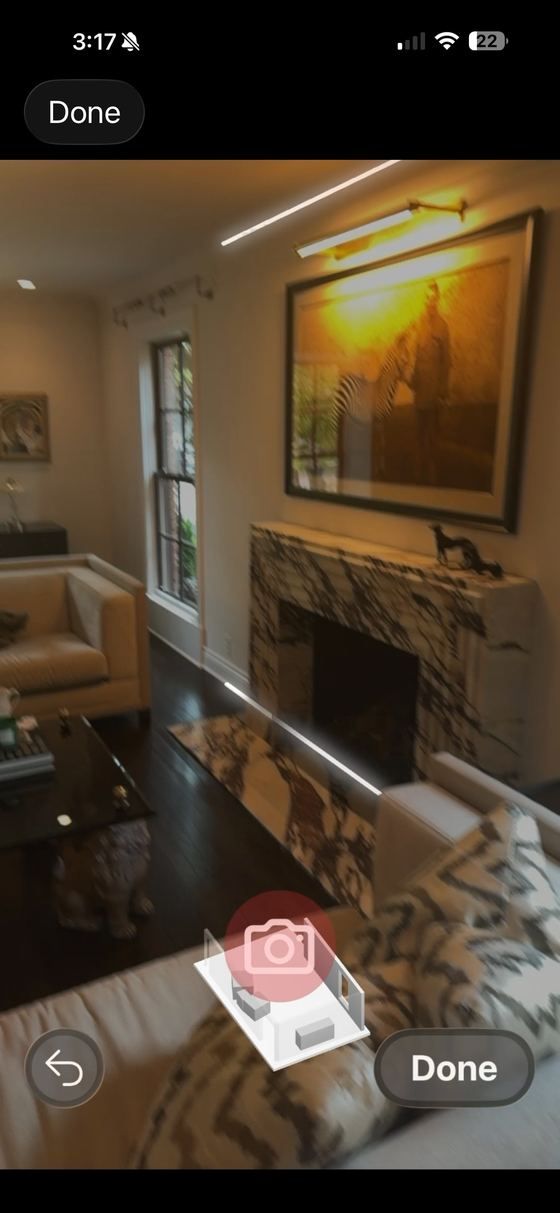
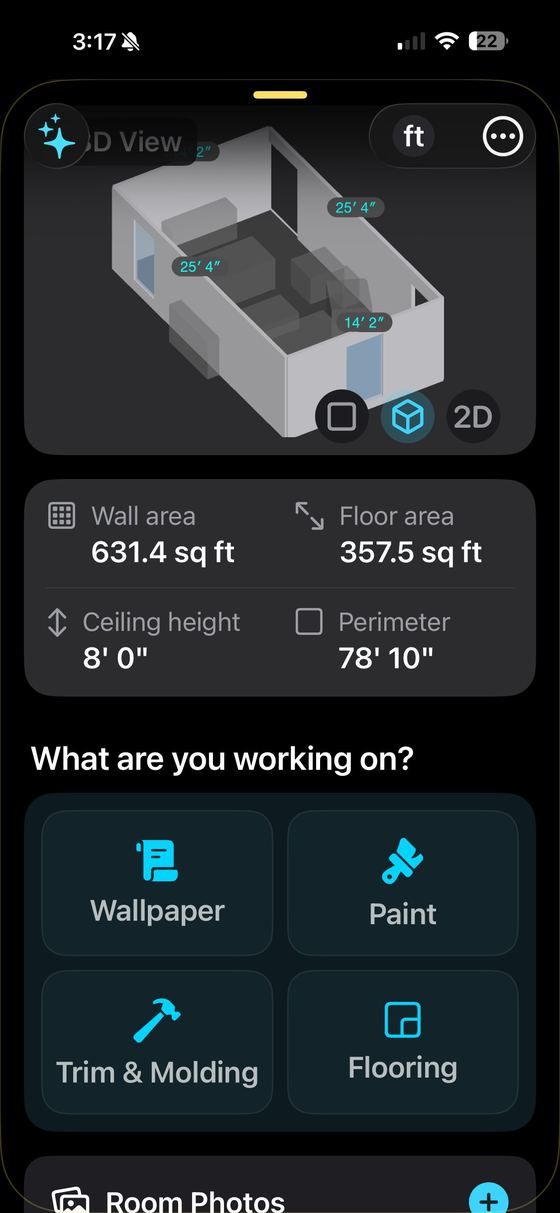
focalScan starts where every estimate should: your real room. Scan it with your iPhone's LiDAR — about ten seconds — and the app builds the walls for you. Then enter the details that move the number: roll or bolt size, pattern repeat, and match type.
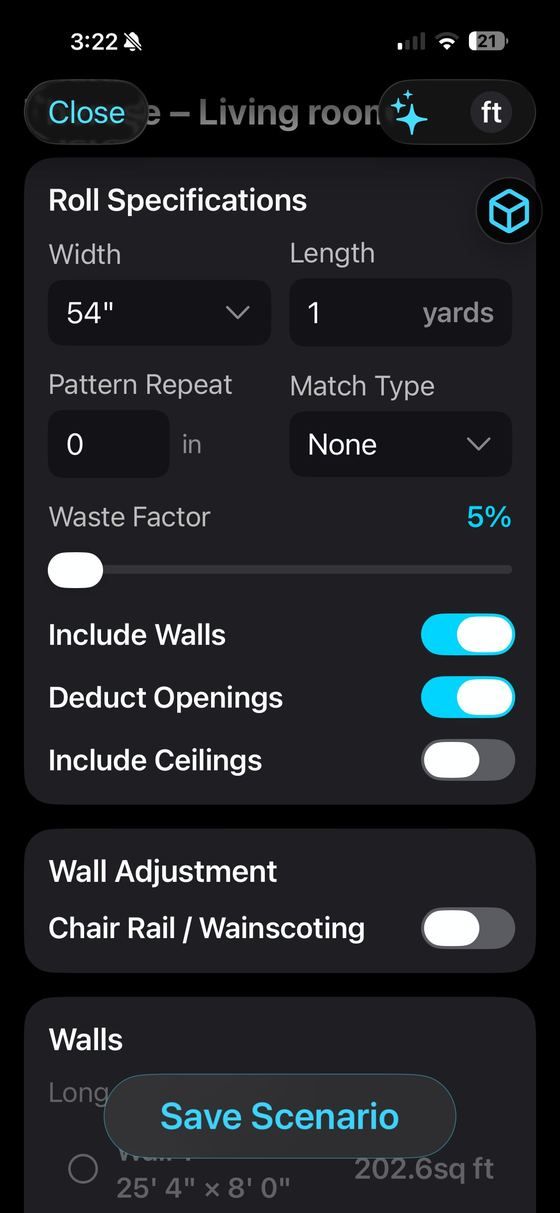
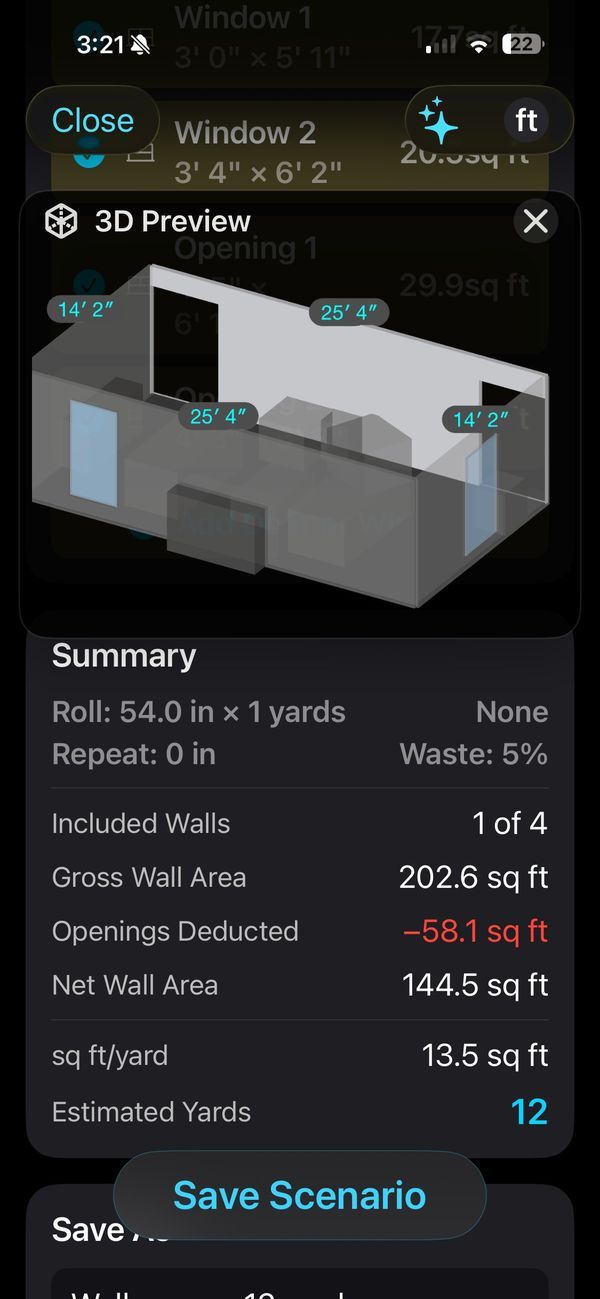
Take Phillip Jeffries Tribeca Threads in Thomas Tan as the example: a 54-inch, two-toned wide-width wallcovering with no repeat, sold in 12-yard bolts. You scan the accent wall and focalScan reads it at 202.6 sq ft, deducts the two window openings (about 58 sq ft), and works from the real net area of 144.5 sq ft. Set the width to 54 inches, the match to none, and a 5% waste factor, and it returns the amount you need: about 12 yards — one full bolt, in a single dye lot, with waste built in. One number to take to your dealer, before you order.